Tuesday, November 29, 2016

Frankenstein, Mary Shelley

Full disclosure: this is my all-time favorite book. This may or may not make this review somewhat... biased. This is one of the most incredibly well written, timeless, dynamic, and complex pieces of literature I have personally ever experienced. I not only have to be cautious of where and when I choose to pick this up to read again (because I disappear entirely into it and not a single thing can pull me out of it once I have started), but I also enjoy how vividly this story plays in my mind as I read. I always imagine a stage set monologue performed by James McAvoy (prior to his ever being cast to actually play Victor Frankenstein). 

Mary Shelley's Masterpiece
To begin, let us take a moment to discuss how extraordinary it is that a work of science fiction written by a woman during any pre-suffrage era was regarded highly enough to still be considered a classic and iconic piece of literature today. Countless many masterpieces may have been lost to history for the singular crime of having been penned by a woman, and that is an atrocity in itself. Shelley truly set the stage for women in writing, paving a sturdy path for writers the likes of Helen Keller, Maya Angelou, and J.K. Rowling. During an era when any woman looking to make a name for herself would be forced to publish under a male pseudonym or sacrifice success, Mary Shelley blatantly refused to have any name but her own credited for her work. Brava, Mary Shelley, and thank you.

A sad truth about classic literature is that, for the most part, it is all kind of difficult to read. The language is antiquated, the pacing slow, the cultural relevance minimal. Opening a lot of books on the "classics" shelf has made me question whatever committee was assigned the task of designating these as such. When I think of something being classic, I think of something that can withstand the test of time. Shelley does that in Frankenstein by speaking so deeply to the ever unchanging struggle of the human condition that this masterpiece will never be anything other than classic.

Victor Frankenstein, our protagonist, is a curious boy who grows up to become one obsessed with the sciences. He devotes so many years to the study, so much time in each and every day, that he becomes entirely engulfed in the process within which he has engaged. He falls into a trap within science that even Jurassic Park has recognized as fallacy, which is that he spent so much time trying to prove that he could that he never stopped to consider if he should. Over time his obsession with this project developed into the creation of a living being fashioned from what had once been numerous corpses. An arm here, a leg there, and a human being was formed.

In one of the most poignant moments in the development of Dr. Frankenstein as a character, we see him completely lose all resolve in the face of his creation. He takes one look at the reality of what he has done and forfeits responsibility for it. There are so many parallels that can be made during these passages that it would be impossible to sum them all up in a reasonable amount of time. Some examples of the more prominent ones for me are those between a divine creator and his creation, between a parent and an unwanted child, and in the human capacity to flee from perceived failure.

During the dozens of times I have either read or listened to the audio version of this book, I always feel strongly that Shelley intended for the audience to connect more deeply with the narrator, Frankenstein, than with the monster. The direction of the narration and the language of perspective convey the idea that we are supposed to feel for Victor and learn from his example of dabbling too extensively into sciences that should not be explored. This is true until the later chapters when his monster takes over the narration and we finally see the experiences of his creation and life through his eyes.

Without a doubt, the passages of the monster's experiences following his waking are some of the most powerful, resonant, and impactful passages in literary history. Tears form in my eyes at the thought of his experiences and at how eloquently he expresses his sorrow, confusion, and profound pain. It is at this moment that Shelley rips you from what you have known and shows you the singularly most significant fictional character ever created. This section alone warrants a second, and even third, pass through this novel to afford the audience a more dynamic view of the story as a whole.

As the story progresses, and the monster becomes guilty of more and more heinous crimes against his creator, the shift becomes again towards Dr. Frankenstein and his struggle. We start to forget what he has cost this innocent creature, and what he legitimately owed him from conception that he never paid out. The monster becomes the hunted, at the grave cost of Victor's life and (some may question) sanity.

Through this entire experience it can sometimes be overlooked that neither Frankenstein, nor his monster, are actually telling this story. A sea captain, who rescued and befriended the mad doctor, laments the loss of his only friend and the reasons for it. We find then that the bias of this entire story was in the hands of someone who loved dearly the creator, but feared the creature. The purposeful taint, and distinct disconnection from the full account of this extensive journey, add to the experience that is Mary Shelley's Frankenstein.

Do yourself a favor and devour this masterpiece. It is worth every word. It is literal literary perfection.

Tuesday, November 22, 2016

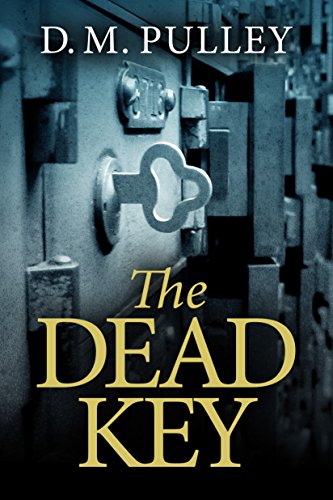
The Dead Key by D.M. Pulley

The more I try to explain what I liked about this book, the more I realize that I am genuinely surprised I was actually able to finish it. It is a murder mystery with a twist, and all of the plot devices are employed at appropriate intervals, but in some very heavy aspects the story fell flat. Hard.

Image result for the dead key
At least the cover art was good...

As I began reading I was intrigued by the concept: two women, 20 years apart, explore the same dark mysteries of a very powerful bank. Page by page we learn more about the conspiracies and wrong-doings committed in the name of power and money, but there are some very big pieces of the story missing. Namely, resolution kind of did not happen in a lot of respects.

The only real surprise was finding out that the hints Pulley was dropping not only didn't lead where I thought they would, but actually didn't go anywhere at all. So much potential was wasted for shock value. Why build up so much back story for so many characters and then just.... drop the ball?

That aside, most of the characters were genuinely well written, except for her primary protagonist. Iris Latch is a twenty-something recent college graduate in 1998 who is thrilled to be getting time out of her cubicle to do field work at a local abandoned bank. The setup for this character was fantastic, and I really wanted to like her, but Pulley kept writing things that either did not fit with the character, or were so appallingly off base that I couldn't help being disappointed.

My biggest complaint was that Pulley had a chance at not just one phenomenal female lead, but two. Instead of using that platform, and a character that was poignantly defined as having been the top of her class in engineering school, she chose the boy-crazy bimbo approach. There was so much about Iris that I loved! She smoked too much, drank even more... she was reasonably flawed and very approachable as a character. The line of tolerance, however, was crossed when Pulley decided to write her as a twit whose thought patterns painted her as a dimwit with no common sense. TOP OF HER CLASS, but she has internal dialogue about how she hopes her mentor doesn't realize she has literally no idea what he's talking about (which is appalling given that even I understood what he was saying and I have never stepped foot near engineering school). Her character became very two dimensional and difficult to interact with on the page. Given that she was the primary protagonist, this was beyond disappointing.

Beatrice, a 16 year old in 1978, was far better written. She had a believable amount of naivety and an abundance of reluctant bravery. It became very clear from the get go that she was down on her luck and just trying to keep her head down to get by. Her aunt, who is not who she seems, has groomed Beatrice to take a role at a local bank in town. Through charm and a naive air, Beatrice lands the job. Not long into her position she is befriended by a feisty redhead named Max. Max knows things, too many things. When Max, who has become a sort of keeper of Beatrice, disappears, it is Ramone, a night security guard at the bank, that takes over looking out for Beatrice.

Fast forward a ways into the book, and what you have is a handful of decently written characters (less Iris), and a pretty captivating story. What do you expect to happen? *spoiler* Nothing happens. Sure, there's a big, scary gun fight right at the end, but ultimately there is no resolution to the majority of story arches Pulley introduces. The entire thing was like one huge fireworks display where the fuse went out at the last second. So very much potential, but the end just killed it.

A lot of people liked this book though, and even I would recommend it if there isn't something better on the shelf. 

Wednesday, November 2, 2016

The Last Apprentice: Revenge of the Witch. (The Spook's Apprentice, The Wardstone Chronicles)

Young adult (YA) fiction is basically my favorite type of literature. Sure, it's pretty dumbed down given the intended audience; predictable even, but it has its charms. A few weeks ago I started reading (audiobooks count) a new YA series written by Joseph Delaney called, "The Last Apprentice." I am currently on the verge of beginning the third book in the series, so as of now it seems it's a series worth investing in. You know, if you're into that kind of thing.

Also with alternate title "The Spook's Apprentice."

Revenge of the Witch, the first in Delaney's series, begins very unassumingly, but draws you into the character immediately. We are introduced to a timid boy who is the youngest of seven sons. It becomes immediately evident that his position in his family affords him very little opportunity in the adult world. His oldest brother is inheriting the family farm, all of the other brothers have scattered into their assigned professions as the father has seen fit to arrange for them, and the aging father (also a seventh son) is fast approaching a time when he will no longer be able to keep up with the demands of his farm. The narrator and main character is a 12 year old boy named Thomas Ward who, due to his place as a seventh son of a seventh son (a 7x7), can perceive supernatural forces that most others cannot. If that's all it takes it's no wonder that average family sizes have decreased over time. Who wants to see that kind of stuff all the time?

Tom is apprenticed to a man named John Gregory, but in his narration he refers to him only as "the Spook." Though he addresses the man by his name, there's always a disconnect in how he refers to him in his private thoughts and with other people. I liked this minor disconnect because it is often that someone in my life is called something different in my head than what I'll call them in person. My brother's name is Kalvin, but in my head he's always been either "Bubby" or "Henry." I can't really explain why, but I related to Tom in his detached identity of Mr. Gregory.

In this first tale, Tom is reluctant to be optimistic about his apprenticeship, but because of the bond and loyalty he has to his "mam" he is going along with it. From his side of things he just doesn't want to disappoint her, but he also sort of understands that she's not like other people. Future books in the series delve into this backstory a bit more, so I'll leave it at that for now. Overall, Tom's reluctance to be an apprentice in this field is mostly because spooks, as a profession, are not really well respected or even tolerated. Though needed and called on often, they are rejected and isolated outside of society. Accepting this apprenticeship means Tom will live a lonely and dangerous life.

As Tom begins his training with the Spook we learn very little about Mr. Gregory himself except that he has what seems to be an almost irrational distaste for women in pointy shoes. The focus of this narration is very much on Tom and his being overwhelmed by decisions he's just not prepared to be making. There's a bit of honesty in the age, too. He lies about things he knows he shouldn't and ultimately ends up in bigger trouble for it. Personally, I appreciated how his character was honest about how his withholding of vital information, or flat out fabrications, caused considerable harm even before the harm was done. "I knew I should have told the Spook everything..." but then he didn't. Classic blunder!

Basically, right off the bat Tom is a very likable and faulty character; someone you can enjoy watching get himself in and out of tough situations. There isn't much by way of development for any other characters, but for a YA series to have a well developed protagonist that doesn't make you want to gauge your eyes out with frustration is a most decided bonus. The story itself is really a backseat characteristic in the focal point of Tom Ward. He's snarky, but likable. Frustrating, but not annoying. Naive, but not innocent. He's the kind of character that is a lot more than he's given credit for and I like him a great deal.

The plot develops around Tom's inexperience in dealing with these new supernatural forces to which he's only ever understood in his periphery. He always knew things went bump in the night, but when he comes face to face with a real witch he just isn't clever enough to outwit her. He points out in his narration that the only reason he even suspected she might not be trustworthy was because of her pointy shoes (Mr. Gregory was very specific about the trustworthiness of women with pointy shoes). And so we meet Alice. Alice is a character that doesn't see a lot of real development over the course of the first book in the series, but becomes important later on. She's the one who tows the line between the dark and the light and becomes a sort of compass for Tom in a way that the Spook isn't able to be.

When Tom's unwitting ignorance lands him and his family at the mercy of a few pretty heinous witches and their meaty, mindless henchman, it's his nerve and persistence that really win out. He wins not because he gets lucky necessarily, but because he knows what mistakes he's making along the way and corrects his course accordingly. He is forced to face complicated choices and sometimes suffers for having made the wrong one (like when he chose to kill the main antagonist when he really should have just trapped her).

Oh, our antagonists. Mother Malkin is a witch the Spook has kept locked away because she's a very special kind of evil. With the help of Alice, a witch known as Bony Lizzie manages to get Mother Malkin free of her entrapment and kids start going missing. Mayhem is imminent. This is where the Spook's skills and extensive knowledge of witches would come in handy.. only.. Bony Lizzie thought of that. John Gregory has been tricked into traveling away from the area and is only accessible to Tom in the library he left behind full of journals and reference books. In taking what he knows already, Tom is able to narrow down his research pretty quickly and finds information that comes to his aid later on.

Helpful information aside, Tom still makes the near fatal mistake of actually killing Mother Malkin. Everyone knows that when you kill a witch her soul can inhabit another and bring down misery on you when you least expect it!! No? Well, Tom didn't know that either. As a result of his inexperience, Tom is forced to face Mother Malkin twice, while also having to overcome being abducted by Bony Lizze and rescued by Alice who also sort of was the reason he was in all of this mess to begin with... Oh, Alice. Making all the wrong choices for all the right reasons.

Once everything is all settled, and everyone is dead or captured that should be, Tom and the Spook conclude their first trial by enjoying a meal prepared by an invisible boggart who appears most often as a ginger cat. Oh, did I not mention that? Well, some things are just better with context. Go enjoy some boggarts, witches, ghasts, and ghouls. Picking up this series might not be for everyone, but it's certainly a gem in a pile of predictable and often formulaic YA nonsense.